
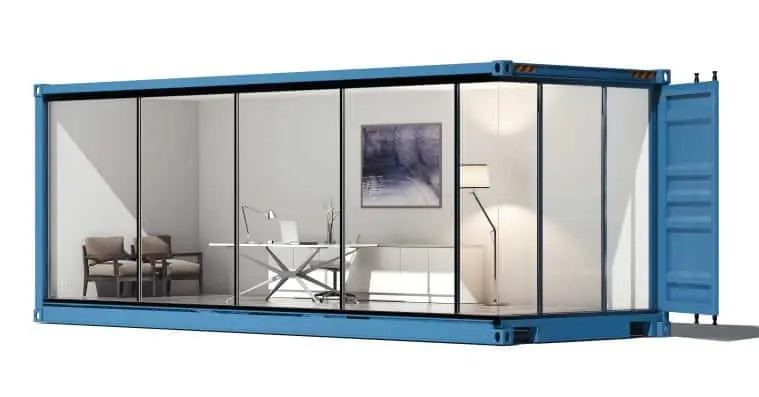
If you manage construction projects across North Carolina or South Carolina, you’ve probably noticed more job sites using shipping container offices instead of the standard construction trailer. It’s not just a trend. For a lot of contractors, these units solve real problems around setup time, durability, and security that trailers have always struggled with. But they’re not automatically the right choice for every project either, so it helps to understand what they actually are before deciding if one fits your site.
What Is a Shipping Container Office?
A shipping container office is exactly what it sounds like: a steel shipping container, either repurposed or purpose-built, converted into a functional workspace. Instead of climbing steps into a raised trailer, most of these units sit directly on the ground, so workers, visitors, and equipment can move in and out without a ramp or staircase.
They’ve grown in popularity on construction sites, at events, and for remote project work because they combine the portability contractors need with a level of durability that lighter-built trailers can’t always match. Where a trailer might work fine for a short, mild-weather job, a steel container office is built to hold up across seasons and across sites.
How They Compare to Traditional Trailers
The biggest difference comes down to material and setup. Trailers are typically lighter frame construction, which makes them easier to tow but more vulnerable to wear, leaks, and weather damage over time. Container offices use ISO-grade steel, so they hold up better against rain, wind, and temperature swings, and they generally need less repair over the life of a project.
Setup time also tends to favor containers. A trailer often needs leveling, tie-downs, and sometimes a permit process depending on the site and municipality. A container office can usually be delivered, placed, and connected to power in a fraction of that time, which matters when a project timeline is already tight.
Security is another factor worth weighing. Steel walls and lockable doors give container offices an edge for storing documents, tools, and equipment on-site, especially on projects where theft or exposure to the elements is a real concern.
Common Uses on Job Sites and Events
These units show up in more places than just construction sites. Some of the most common applications include:
- Construction site offices for plans, meetings, and equipment storage
- Break or lunch rooms for crews who need a climate-controlled space to step away
- Field offices or in-plant storage for ongoing operations
- Temporary meeting or changing rooms
- Event headquarters for logistics, ticketing, or security coordination
- Remote project spaces in areas without reliable existing infrastructure
The common thread is flexibility. A single unit can serve more than one purpose depending on how a project evolves.
What’s Typically Included
Most office and storage combo units come with a similar baseline of features, though specifics vary by provider. Look for insulation and climate control, since a unit without heating or air conditioning won’t hold up well through a full Carolinas summer or winter. Electrical outlets, overhead lighting, and phone jack compatibility are standard on most models, along with a countertop workspace for basic tasks.
Larger units often include built-in plan tables, useful for architects, engineers, or foremen who need to review documents on-site. Size is worth considering early: 20-foot units work well for smaller crews or tighter budgets, while 40-foot units suit larger teams. If space needs grow, some units can be stacked to create a modular, multi-level setup without adding a second footprint.
Things to Consider Before Renting or Buying
Before committing to a container office, it helps to think through a few practical questions. Will you need it for a few weeks or for an ongoing project? Renting usually makes sense for short-term jobs, while purchasing can be more cost-effective for contractors who use these units regularly.
Site access matters too. Ground-level units are easier to place on uneven or restricted sites, but it’s still worth confirming what a delivery truck needs in terms of clearance and access. And if your project needs a specific layout, whether that’s a divided office and storage section or an open floor plan, it’s worth asking a provider about customization options like furniture, ramps, or specialized doors before the unit arrives.
It’s also worth thinking about how long the unit needs to serve its purpose. A project that expects to run for a single season has different needs than one where the office will function as a semi-permanent fixture across multiple job phases. Asking a provider about lead time, delivery logistics, and what happens at the end of a rental period can save a lot of headaches once the unit is already on-site.
Final Thoughts
Shipping container offices aren’t the right fit for every job site, but for many contractors and event organizers, they solve problems that trailers and traditional builds often can’t: faster setup, better durability, and more secure on-site storage. If you’re weighing your options for an upcoming project in the Carolinas, Carolina Containers can walk you through what’s available and help you figure out what actually fits your site. Contact Carolina Containers today at (919) 562-9187 for a free quote or more information.