
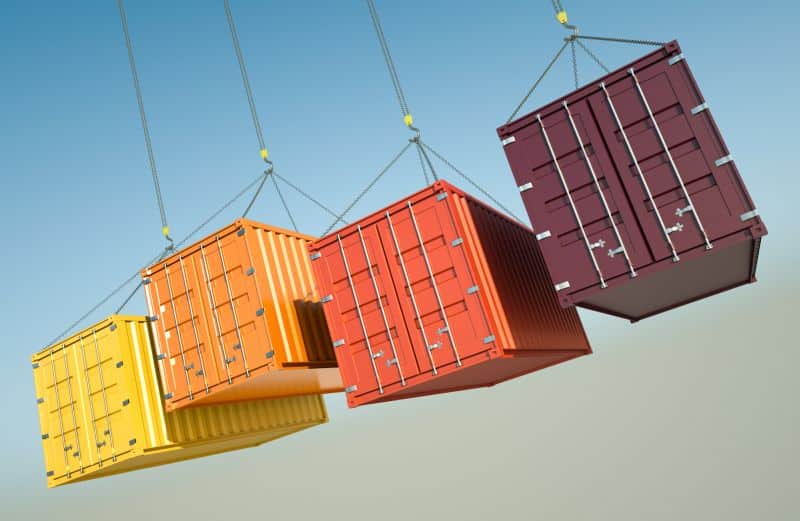
Shipping containers go by many names—intermodal containers, ISO containers, cargo boxes—but one term you’ll often hear, especially in the U.S., is “Conex box.” So where does the name come from? And why is it still used today?
In this article, we explore the history of the Conex container, how the term came to be, and how it has evolved from a military solution into one of today’s most versatile storage and building tools.
The Origin of the Conex Box
The story begins in the 1940s, during a time when the U.S. military needed a faster, more organized way to ship supplies overseas.
World War II and Early Container Concepts
- Before Conex, goods were transported in bulk or wooden crates.
- These early containers weren’t standardized, couldn’t be stacked, and were hard to move.
- Efficiency and secure transport were major challenges.
Birth of the Transporter
After WWII, the U.S. Army’s Transportation Corps developed a prototype called “The Transporter”—a strong, steel container designed to simplify military logistics.
From Transporter to CONEX: A New Era in Military Logistics
During the Korean War (1950s), the improved version of the Transporter was introduced and widely used. It was officially named the “Container Express,” designed to:
- Carry up to 9,000 lbs of supplies
- Be easily moved between ships, trucks, and rail
- Reduce pilferage and protect cargo from the elements
Over time, Container Express was shortened by troops and military logistics personnel to the acronym CONEX (CON = Container, EX = Express). The term stuck—and it’s still in use today.
How Conex Boxes Became a Global Standard
Though originally a military innovation, the concept of modular, stackable containers caught on in the commercial shipping world soon after. By the 1960s, companies like Sea-Land began using similar containers to move goods globally.
The key features—stackability, durability, and standard sizing—were game-changers. These innovations laid the groundwork for modern intermodal shipping.
While “Conex” is technically a military term, it has become a common term in the U.S. for any steel storage container, especially in the construction and logistics industries.
What Makes a Conex Box Unique?
Modern Conex boxes are built from 14-gauge corrugated steel and are known for being:
- Weather-resistant
- Tamper-proof
- Highly customizable
Today, you can find Conex containers modified into:
- Mobile offices
- Climate-controlled storage units
- Workshop spaces
- Off-grid cabins or tiny homes
At Carolina Containers, we’ve seen Conex boxes transformed into everything from portable job site offices to fully livable tiny homes with plumbing, electricity, and insulation.
Conex Containers Today: Still Going Strong
Even decades after their creation, Conex containers remain one of the most dependable storage and building solutions. Why?
- They’re secure and portable
- They can be easily customized
- They last for decades with proper maintenance
- They’re suitable for both temporary and permanent use
Whether you’re a builder needing job site storage or a homeowner turning one into a backyard guest house, the Conex container has endless potential.
Conclusion
The term “Conex” may have started in military slang, but it now represents one of the most reliable and adaptable forms of storage and transport available. What began as a solution for wartime logistics has become a staple in construction, shipping, and even residential design.
If you’re looking for a customized Conex box, Carolina Containers has one of the largest selections on the East Coast. From 10ft to 40ft sizes, we offer container sales, rentals, and modifications tailored to your needs.
FAQs About Conex Boxes
Is a Conex box the same as a shipping container?
Yes. “Conex” is a nickname that originated from the military term “Container Express.” Today, it’s used interchangeably with “shipping container” in the U.S.
What are Conex boxes made of?
Most are made from corten steel, known for its durability and resistance to rust.
Can a Conex box be used for a home or office?
Absolutely. Many are customized with windows, doors, insulation, electricity, and plumbing to serve as offices, homes, or workshops.
Where can I buy or rent a Conex container?
You can purchase or rent from trusted local suppliers like Carolina Containers, which offers delivery, modifications, and expert guidance.